
National Handwriting Day: Celebrating a Lost Art
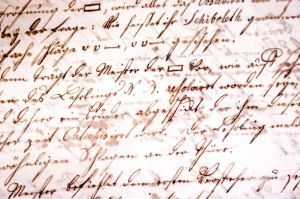
 Celebrate a Lost Art on National Handwriting Day
Happy National Handwriting Day, everyone! I hope that you awoke to find new, freshly-sharpened Blackwings in your pencil cup and stacks of fresh notebooks on your desk, just waiting to be filled with your handwritten thoughts. After all, National Handwriting Day is the day that the benevolent Flying Fountain Pen visits the homes of all hand-writers in the United States and rewards their devotion to this ancient craft with new office supplies –
(Wait. I’m sorry. I’ve just been informed that the arrival of our office supply order from Staples has no correlation to National Handwriting Day. Huh.)
National Handwriting Day is actually a holiday founded by the Writing Instrument Manufacturers Association. It is held on January 23rd in conjunction with John Hancock’s birthday, and is designed to celebrate the lost art of handwriting. Here is an excerpt from the WIMA website on this lost art:
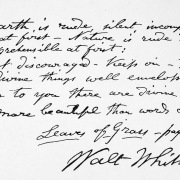
Handwriting allows us to be artists and individuals during a time when we often use computers, faxes and e-mail to communicate. Fonts are the same no matter what computer you use or how you use it. Fonts lack a personal touch. Handwriting can add intimacy to a letter and reveal details about the writer’s personality. Throughout history, handwritten documents have sparked love affairs, started wars, established peace, freed slaves, created movements and declared independence.
While I take down the Palomino Pencil Palm tree that I had lovingly constructed in honor of today’s festivities, I can’t help but cast my mind back over my own scribbled history with handwriting. I was one of the last groups of students in the early 1990s to be taught cursive script before I learned how to print. I loved cursive handwriting, as the loops and whorls seemed to make everything more elegant and exciting, even the endless repetitions of “The quick brown fox jumps over the lazy dog.”
As I moved through elementary school, the rapidity and precision of printing replaced the desultory pleasures of cursive, and with it, life moved at an equally clipped page. Naptime was no more – this was the real world, and in the real world the blunt, stark lines of printing were necessary to keep up with the frenetic pace of long division and history reports on Vikings.
However, as the years passed I returned to cursive, and found that while I had forsaken it for speed and efficiency, the fluidity of cursive handwriting was as speedy as printing, if not more so. My thoughts joined together more easily, it seemed, as I connected letter to letter. Rather than the nervy, staccato beat of printing, I found that cursive handwriting gave my words movement and energy as the loped across the page.
To look at my handwriting now is to see the influence of both styles of handwriting stamped firmly into each letter. For short notes, printing is still my go-to style, but I can’t resist an idiosyncratic flourish here and there. And the longer I write, the more naturally I fall into a cursive script. I still find myself admiring the handwriting of others – I still remember a classmate in junior high whom I envied in equal parts for her bright red hair and her typewriter-regular, perfectly formed handwriting – but now I can see that my handwriting is an expression of who I am, what I’ve learned, and where I hope to go.
Now, if you’ll excuse me – I’ve been hiding long-point sharpeners around the office, ala the Easter Bunny, and Alex is going to be none too pleased when he sees the mess I’ve made of our stockroom. While I’m off, leave your own personal history of handwriting in the comments below! Will you celebrate today by handwriting a thank-you note, a love-letter, or a missive all you own?




Leave a Reply
Want to join the discussion?Feel free to contribute!