
The Poetry of Alfred Lord Tennyson: In Memoriam
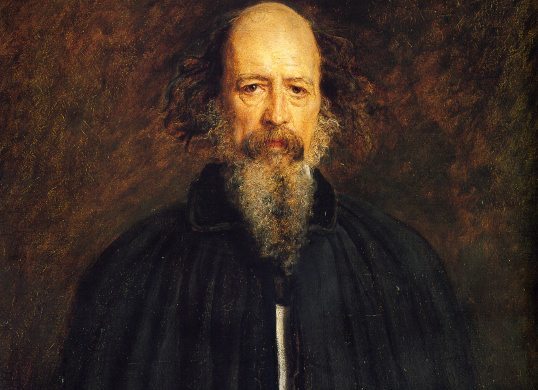
 The Poetry of Alfred Lord Tennyson
Yesterday marked the 203rd year since the birth of Alfred Lord Tennyson, one of the quintessential poets of the Victorian era of British literature. Alfred Lord Tennyson was born on August 6th, 1809 in Somersby, Lincolnshire, England. He was one of twelve children. Tennyson would live to become one of the most famous poets of the Victorian era, which would include his being given a peerage in 1883 by William Gladstone, a remarkable accomplishment for a poet, even by modern standards.
I recently read through an enlightening and comprehensive biography on Tennyson from the highly esteemed editors at Poetry Magazine. As I read more about him, I found his life to be a model for aspiring writers to follow. Tennyson’s work-ethic was solid, and regarding the development of his craft, he proved his passion for literature, often emphasizing an ability to surmount the tribulations of his life, by not simply cataloging his experiences, but giving them character, veiled in a poetic wisdom, which simultaneously aimed at establishing a commonality of understanding.
To his credit, Alfred Lord Tennyson has proved to be a prolific literary craftsman, painting a portrait of the Victorian era both vivid and sublime. But what I found the most admirable about his life story was the fact that he’d endured the trials of his life–the psychological illnesses amongst his family members, who were institutionalized at times, the loss of dear friends, difficulties in love and health, while always working to solidify a lasting impression in the world of fine arts.
Alfred Lord Tennyson often told of his life in his poetry and the difficulties he faced. His contribution to the canon of Victorian era British literature, includes many elegies, such as “In Memoriam,” which was an elegiac composition inspired by the death of his lifelong friend Arthur Hallam. The lines from this ambitious poem seen in the stanza below emote his belief in language despite his realization that language seems to fail to encompass the whole experience of grief.
If you read more of the poem you’ll appreciate the complexity of emotion–his greatest strength, which resounds through much of his poetry. In Memoriam finds Tennyson’s gift in its most distilled form.
I remember when I first encountered Tennyson’s poetry. I was meandering through the sleepy town of Jackson, CA on my way to Hein & Company, a rare bookstore in historic downtown. The air was pungent with the aroma of leather-bound books; I could hear a shop clerk laughing, engaging in small-talk with a prospective customer. Among the books, the store also contains one itinerant, tabby-cat.
The shelves of this modest store are filled with countless volumes of Victorian era literature. In fact, just about any era you can think of may be hidden among the dust of the fully stocked shelves. I once found a copy of Carlyle’s, “Sartor Resartus” there, but I digress. The book in question–which was called, something like, “One Hundred War Poems” cost me no more than a few dollars. It was there that I first read, “The Charge of the Light Brigade,” a poem that admittedly carries a sentiment with it that continues to make me uneasy to this day. It seems unduly bellicose, even for a war poem.
Listen to “Charge of the Light Brigade.” (There is also audio of Ulysses at the same location on the previous linked website.)
Nonetheless, I still enjoy reading Alfred Lord Tennyson’s work, in particular his more lyrical poetry like, “Mariana in the South.” Perhaps you’ll find a few favorites of your own around his birthday. I was also pleased to find out that we shared a birthday, so Happy Birthday to us both, and we’ll read your poetry in memoriam to your life of literary excellence.







Leave a Reply
Want to join the discussion?Feel free to contribute!