
Bradbury lit the spark of imagination – PPC
 Pencils and Pop-Culture: Bradbury Lit the Spark of Imagination
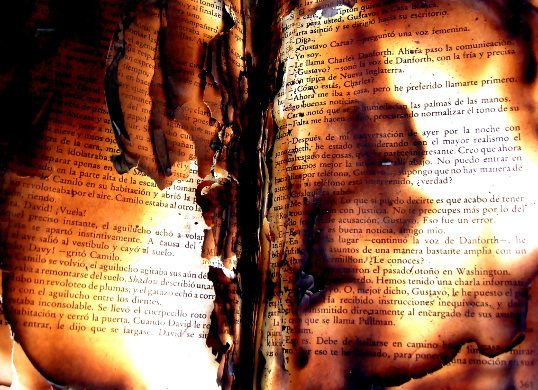
The passing of Ray Bradbury yesterday at the age of 91 fills me with a certain kind of nostalgic sadness. His writings, from “Fahrenheit 451” to “The October Country” to “Dandelion Wine” were enormously influential on me as a young reader. I first read “Fahrenheit 451” when I was in sixth grade, and Bradbury’s words were as bracing as jumping into a pool of ice water. I was a fairly serious kid, more concerned with following the rules than destroying them.
Bradbury changed all that. “Fahrenheit 451” was my first clue that maybe, just maybe, everything that was supposed to protect us could actually harm us, not just on an individual level but as a whole. And it made me swear off television for weeks (which, honestly, was pretty easy since I was always a bookish kid).
When writing about “Fahrenheit 451,” Bradbury noted that Professor Faber, who guides protagonist Guy Montag to the country-side full of exiled book-lovers, shared a name with pencil manufacturer Eberhard Faber (now Faber-Castell). Guy Montag shared a name with a brand of paper.
Pencils and paper are rarely carried as symbols of a revolution, but they are as powerful and potent as any weapon. Victor Hugo once said, “One resists the invasion of armies; one does not resist the invasion of ideas.” Writing itself can be a revolutionary act.
Bradbury always expressed surprise that people read “Fahrenheit 451” as a text against censorship, insisting that the main argument was that television was destroying people’s minds. However, the book is regularly cited as one of the most frequently banned books in America. Whether Bradbury intended it or not, “Fahrenheit 451” has become far more than just as a screed against television.
I will always be grateful that I had the chance to encounter Bradbury’s works for the first time at an age where I was just beginning to question the world around me. His works kept me spellbound and opened my mind to a whole new world of possibility. No matter how brightly a fire may burn, Bradbury’s words can never be destroyed. Writing comes with an enormous amount of responsibility; it’s not enough to create something unique or entertaining – we are responsible for giving voice to ideas and thoughts. In the end, they are the only things that last.








Leave a Reply
Want to join the discussion?Feel free to contribute!