
Sunspot Drawings from Mt. Wilson Are Keeping an Age-Old Art Alive
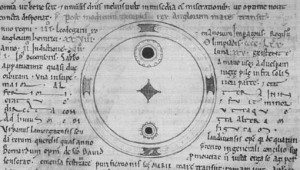
Sunspot Drawings: An 885 Year Tradition
Steve Padilla is a solar technician. He is a scientist and an astronomer. He is also an artist. Every day, Padilla ascends 150 feet to the top of a solar telescope on Mt. Wilson in Los Angeles, California, to carry on the age-old tradition of drawing sunspots (one of the earliest records of sunspot drawings is that of an English monk in the year 1128). Sunspots have been recorded from Mt. Wilson since 1917, and Padilla has been the artist behind these daily drawings since 1976.

Early observers thought the sunspots were planets, and Galileo believed they were clouds. Today, we know that they are caused by magnetic activity and can be used to predict solar flares. The Space Weather Prediction Center in Boulder, Colorado, compares the records Padilla creates at Mt. Wilson with similar records collected from solar telescopes in Australia, Italy, and New Mexico. The information benefits owners and operators of electrical grids, allowing them to predict shifts in power. The information from sunspot drawings was absolutely vital in 1989 when a solar storm caused a blackout in Montreal and interfered with sensors on the Space Shuttle that caused some to believe there had been a nuclear strike. Thanks to work like Padilla’s, the misconceptions were quickly dispelled.
Padilla’s daily work is a marriage of science and art. He uses special equipment to create a map of the sun, denoting longitude. His toolbox contains pencils that range from soft to hard lead – including 2B, 6B, 5H and 9H – and with varying sharpness of tips. He sketches and shades each sun spot carefully before annotating the map he has made. Below is Steve Padilla’s map from November 5, 2013, when the clarity of the sun was 1.5 on a 5-point scale. Click on the image to view Padilla’s most recent drawing, and make sure to check out the archive of sunspot drawings from Mt. Wilson.

According to UCLA professor emeritus Roger Ulrich, who oversees the solar telescope on Mt. Wilson, telescopes and cameras on spacecrafts may be able to recognize more details, but nothing beats the human eye for nuanced observation and recording the subtle features of each sunspot. This is in clear evidence in a drawing by Samuel Langley in 1873, in which the sunspot resembles a breaking wave:

Sadly, the solar telescope at Mt. Wilson’s budget runs out in the spring, and it is uncertain if it will be renewed. Even if it isn’t, Padilla hopes to continue his work as a volunteer. If you’re fascinated by sunspots and want more information, I would recommend starting with the 400-year record here.







Have you ever considered writing an e-book or guest authoring on other
blogs? I have a blog centered on the same information you discuss and would love to have you share some stories/information. I know my audience would appreciate your work.
If you’re even remotely interested, feel free to send me an e-mail.