
Math Games and Lessons for Elementary Students
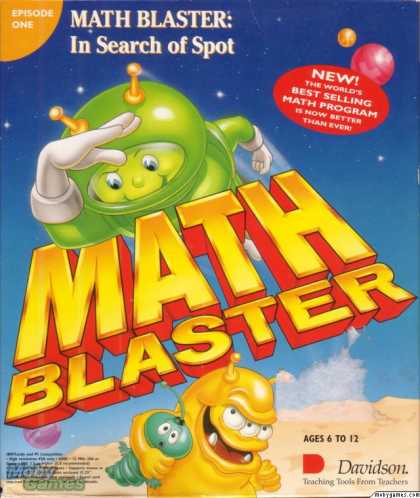
 When I was young, if I wanted to play math games on the computer, it was Math Blaster. Remember him? These days, there are enough online math games at PBS.org, Math Playground, and other educational websites to keep kids busy for weeks. While online games are fun to reinforce skills, nothing beats real, live, interactive math games that kids can play with adults and with one another. No one knows better than I do (as someone who absolutely loathes math) that it’s important to show kids early on that math can be fun as well as useful.
Math Games
“Store” is a classic, and one that can be played a variety of ways for a variety of skill levels. In case you couldn’t guess, the idea is to simulate the experience of purchasing items in a store so that kids learn money-related math skills. Gather a few household items – school supplies like pencils and erasers work great, as do small toys – and label them with price tags (index cards, stickers, etc.). Using real or play money, have kids “buy” items and calculate the correct change they should receive. Older kids can work on calculating sales tax, or reducing by percentages on “sale items.” Selling small new items in your play store and letting kids keep items when they calculate correctly is also a fun way to reward a job well done.
Blocks, Legos, and Lincoln Logs are great tools for incorporating into math games. As kids are learning measurements, have them construct buildings with their favorite toys and measure them with a ruler or measuring tape and favorite pencil, then calculate perimeter, area, circumference, and diameter. More complicated shapes can accommodate kids of a higher skill level. Lessons in volume can also include small candy like M&Ms, and discovering which shape – made with the same amount of blocks – can hold the most candy. Eating the candies at the end is a delicious payoff for young math students – and their teachers! Don’t forget to have students convert measurements from the imperial system to the metric system and back again.
The biggest struggle of my elementary math education was telling time. I even had to stay in at recess one day because I just couldn’t figure it out. A fun way of learning to tell time – and learning about measurements – is to take it to the kitchen! Using a clock (you know the kind I mean – not digital!), determine where the hands need to be when each step of the process of baking your student’s favorite sweet treat is complete. Have kids measure ingredients themselves, watch the time as they do so and write down their times with a pencil. Don’t forget to eat your delicious creations at the end!
It can sometimes be hard to motivate kids to play – and enjoy – math games and other educational games. Rewards are an important part of the process, since it’s sometimes hard for younger kids to anticipate the far-off reward of solid foundational math skills. Pencils make excellent prizes, along with erasers and pencil sharpeners. Customizable pencils like these are especially great for reminding kids of their educational achievements.
What math games did you play when you were younger, or do you play with your kids now? Tell us in the comments!






Math games is also education for our kids.
i agree with youn adam
The math games can help us improve our math and our reading so we can past some tests that we do