
A Map to the End of the Known – An Exercise in Personal Cartography
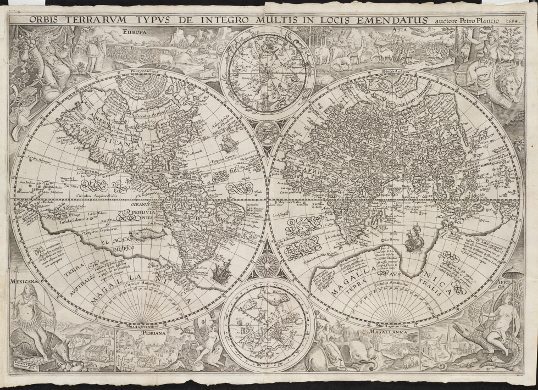
 Is Cartography a Dying Art?
You take a left at the first intersection, then a right down Main Street, go four blocks and enter the office on your left.
Drive past the the old hospital, up the hill about 3/4 of a mile, follow the curve and turn into the driveway where there’s a donkey in the yard.
When all else fails, you use Bing Maps or Google Maps.
We all have our own methods of getting where we need to go, but how many of us, if pressed, could draw a map? Not just a crude sketch, but something that accurately depicts where we are and where we’re going? Cartography is a dying art, it would seem, with much of the world relying on services like MapQuest or Garmin to lead us on.
Old maps have become kitschy decorative touches, appreciated mostly for their aesthetic value. Reproductions of vintage maps, carefully delineated in pencil or ink on faded parchment, are plastered on walls and splayed across rugs, a testament to their beauty and value as works of art.
But the art of cartography is about much more than giving us physical delineations of space and scale. A map delineates our boundaries, and often they signify at a glance who’s in power and the structure of those power systems. Take, for example, an exhibit featuring maps of the Phillipines at the Metropolitan Museum of Manilla. The 134 maps featured in the exhibit showcase 300 years of Phillipine history, and show the evolution of the island’s government and history. Not only does the growth of the islands showcase the impact of conquest and colonialism, but it also offers a glimpse into the Phillipines place in the world as a whole.
There is also the recently unearthed map of Jerusalem, which dates back to the early 19th century. Not only does this newly-discovered, hand-sketched map give historians crucial insight into a little-known period of the city’s history, but it also explains the basis for several other maps, all of which appear to be based off of this one, single map. An entire sequence of history, illuminated by one scrap of paper.
Were you to develop your own cartography skills, what would they look like? If you were to draw a map of your daily route, I have a feeling it would reveal far more than the location of your favorite coffee shop or the street name of your workplace. A map is a way for us to put the world around us into relative perspective. That five mile stretch of gridlocked freeway may be the same distance as your five mile bike route, but it may feel infinitely longer. Are they the same when you sketch them on paper, or do you find yourself stretching out that length of freeway to how long it feels, instead of how long it is? What you value comes into play as well – do you value infinite detail, making sure every stop along your route is accounted for? Do you value the big picture, preferring to render everything in bold, impressionistic strokes?
Pick up a pencil and put your own cartography skills to the test. You may find that while you try to outline where you go, you may just be sketching out who you are.




Leave a Reply
Want to join the discussion?Feel free to contribute!