
Unhook the Stars: The Lyrics of Langston Hughes
 Unhook the Stars: The Lyrics of Langston Hughes
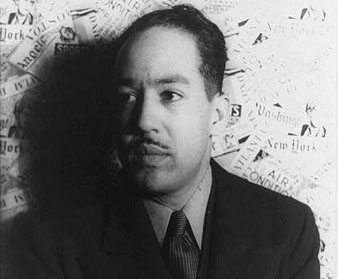
Langston Hughes, born 110 years ago today, has been called “The Poet Laureate of Harlem” for his works depicting the everyday struggles and triumphs of the people of Harlem during the 1920s through the 1960s.
Harlem during the time of Hughes was both violent and vibrant, with the sounds of jazz and blues spilling out into the streets late into the night. Haunting and melancholy in one measure, then full of life and joy in the next, it makes sense that the music of Harlem sinuously wound its way through Hughes’s work.
“Droning a drowsy syncopated tune,
Rocking back and forth to a mellow croon,
I heard a Negro play.
Down on Lenox Avenue the other night
By the pale dull pallor of an old gas light
He did a lazy sway . . .
He did a lazy sway . . .
To the tune o’ those Weary Blues.”
But, while there has been much discussion in terms of musical influences on Hughes’s work, less attention is given to Hughes’s own work as a lyricist. In 1946, Hughes collaborated with legendary composer Kurt Weill on “Street Scene,” an American opera based on a play of the same name by Elmer Rice.
The lyrics run the gamut of musical stylings, ranging from the pop-culture patter of “Moon-faced and Starry-Eyed” and the elegant restraint of “What Good Would the Moon Be,” to the heartsick shuffle of “Lonely House.”
Nor was “Street Scene” Hughes’s only foray into the world of opera and musical theatre. “Troubled Island,” for which Hughes composed the libretto in 1937, was based on Hughes’s own play, “The Emperor of Haiti.” “The Barrier,” based on an earlier Hughes play from 1937, had its premiere as an opera in 1950.
In 2002, another unknown Hughes opera was discovered; a 35-minute blues opera called “De Organizer” was found in the papers of Eva Jessye, the musical’s original choral director. The lyrics are simple and straightforward, honestly communicating the hopes of a group of sharecroppers for a better future.
Hughes never lost sight of his connection to the people of Harlem, or to those musical rhythms that would characterize his work. He once said, “I tried to write poems like the songs they sang on Seventh Street… (these songs) had the pulse beat of the people who keep on going.”
“And far into the night he crooned that tune.
The stars went out and so did the moon.
The singer stopped playing and went to bed
While the Weary Blues echoed through his head.
He slept like a rock or a man that’s dead.”
–The Weary Blues







Leave a Reply
Want to join the discussion?Feel free to contribute!