
An Interview with Christian Tamburr
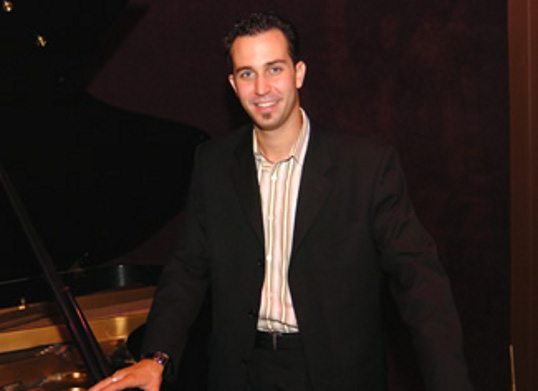
 I had the esteemed pleasure of sitting down with Blackwing Featured Artist Christian Tamburr on the heels of his newest album “Places.”
Interview with Blackwing Musician Christian Tamburr
Where did you grow up?
I was born and raised in Merritt Island, Florida, which is east of Orlando on the coast just outside of Cape Canaveral. My family still lives there and I go back often to perform special concerts in my hometown.
What schools did you attend?
I was fortunate to attend fantastic Public Schools through my early years. From the time I entered 3rd grade till graduating high school, I had wonderful inspirational music teachers. I moved school districts in 7th grade to attend a strong music program at DeLaura Jr. High School with band director Mike Waller. I continued on to Satellite High School in Satellite Beach FL under direction of Mark Nelson, who is considered to have one of the best High School Jazz programs in the State.
I attended the University of North Florida in Jacksonville, FL and stayed there for 2 years before leaving to tour and perform internationally.
What was your dream career while you were growing up?
Once I found music I really only imagined myself performing as a musician.
I was classically trained so early on I found myself dreaming to play Timpani for the New York Philharmonic. When I discovered jazz my dreams were set on playing with the top names in New York and getting the opportunity to travel around the world. So far, I have been fortunate enough to do just that. Had I not gone into music I always loved the idea of being a pilot for a large airline.
How did you get into music?
My father played guitar and we always had music playing around the house. I was never forced into it, I just saw my dad sitting there jamming out and I wanted to take part in the jam. I picked up guitar at about age 5 and then piano at age 8. Mom made me go to band camp in 6th grade against my will, and dad seemed to make being in band appear cool. Together they have always been so supportive of my career and dreams.
What drew you to jazz music in particular?
My ear has always enjoyed finding new in the old and I love how jazz allows you to explore and stretch. The spontaneity and creativity that happens on the bandstand during a performance is invigorating. You never play the same song the same way twice.
I love the heritage of this music as well. It’s our true original American musical art form. I enjoy getting to travel to places like Japan, or Russia and share our music with those cultures. Jazz defines the ability to think freely and encourages the freedom of expression. That is a wonderful concept to share with other cultures outside the US.
What are your favorite musical genres outside of jazz?
I like a lot of different types of music. I’m not so fond of club music that is loud booming bass all the time. I enjoy great melodies and great lyrics. Duke Ellington said: “there are two types of music… Good Music and Bad Music”. I do my best trying to listen to the good stuff. The more you have your ears open to new sounds the more those sounds find their way into your own music. I’ll listen to anything that has heart and soul.
Who are your favorite musicians?
There are a lot but I will name a few… I love Oscar Peterson and his trio. Ray Brown on bass could make anyone swing. Ira Sullivan is a musician who I met when I was only 13 and although not a common name, the kats who know, know Ira Sullivan. He inspired me follow my dreams in music and still to this day at 80 years old plays circles around guys half his age. The first concert I ever attended was Pat Metheny when I was in 3rd grade. His music has always pushed the definition of traditional jazz, and his compositions continue to inspire me. My iPod is of course filled with the greats like Coltrane, Bird, Miles Davis, Hancock, Monk, etc… So many great kats to listen to so little time! I must admit that some of my favorite musicians are the ones that I get to make music with in my band. The more we play together the more we become one and the experience is so very special each time we get together and play.
The vibes are an interesting instrument. What caused you to want to play them?
They were out of French Horns. Seriously. I went into 7th grade thinking I would play French Horn. They were out and only had oboes, clarinets, and percussion kits. I picked percussion. Thank god. I honestly feel like even the best French horn players in the top orchestras still freak out before they have to play that solo high note… Too much stress!! Playing percussion allows you to bang on stuff, and it’s a great relief of stress! I’m all about the less stress the better when performing.
I had made it into jazz band in 8th grade playing drums. I was in there with two 9th graders who got all the good drum parts, so I had to play ballads, swishing the brushes on slow boring songs. When I wasn’t playing I was sitting around not doing a whole lot. My Jr. High School Band director Mike Waller said… “Enough of you sitting around here play this… its called a VIBRAPHONE”. That was it. I was hooked. It was different, sounded cool, and I got to set up next to all the girls in the saxophone section.
How would you describe to the vibes to someone who isn’t familiar with them?
The Vibraphone is a mallet percussion instrument. It’s similar to a xylophone or marimba however those two instruments have wooden bars. The Vibraphone has metal bars, which allows them to ring and is muted by a sustain pedal similar to a piano. Often they have a motor, which drives flaps in the resonators of the instrument and gives the sound a vibrato effect. I often reference the NBC themed 3 notes which were played on the vibraphone back in the early days. It was originally a sound effect instrument and it wasn’t till really the 30s that it was used in popular music.
What other instruments do you play?
I play piano and vibraphone professionally along with all the mallet percussion instruments. I was trained classically in percussion so I play drum-set, hand percussion and anything you might find in an orchestral percussion section. I play just enough guitar to still be able to jam with my dad.
Can you describe your creative process for our readers?
I generally sit down at the piano when I’m working on a new arrangement or composition. It allows me to hear both a starting melody and harmony to accompany it. Sometimes I will start by hearing a single line melody on the vibes, and then move over to the piano to flush it out. I try to keep as much technology out of the process as possible. I’ve always been drawn to just sitting with a sheet of staff paper and a pencil. There is something romantic about the simplicity of doing it that way. All I’m missing is the wig and the candle chandelier.
Having played live music and recorded in a studio myself, I have some knowledge of the difference between the two. Can you briefly explain what this difference is like for you?
The studio can be a friendly place and a scary place for musicians. I have found myself in both situations however the more time you spend in the studio the easier it gets. When you play live (such as a concert) you are more likely to take chances and sometimes those chances are what turn out to be really magical moments… If it works, great… if it doesn’t its gone and you move forward. When you enter the studio you want to try and capture that “magic” but there is always the awareness that whatever you do is locked in time and if that is the take, it will stay that way forever. Often this creates a sterile environment where you take less “chances” and the musical excitement lacks.
The trick for me has always been to rehearse and tour the band prior to the recording session. Tunes are worked out and you’re not thinking too hard. You’ve worked through all the logistics and onto making music. Then, when the band shows up to the studio it’s just another “gig” or run through of the tune and we are more likely to settle into taking those chances or risks I mentioned before. It’s really about comfort. The more comfortable you are the more you can forget about all the microphones in the room and just go for it.
You described a recorded piece of music as being “etched in time.” Can you elaborate?
After the band records a take, we often immediately know if it was a good take or if we should do it again. If it feels good in those last few seconds after the song is over, we generally will head into the control room to take a listen. We go back and focus on all the elements of the song… was the melody accurate, did the time feel good, was everyone in the same groove, how were the solos etc… Once we all agree “that’s the take” we move onto the next tune. After all the tunes are recorded, mixed, mastered and pressed, you can’t change it. That record is out there for everyone to hear good, bad, or indifferent.
Do you use any other means of creative expression? Drawing, writing, etc?
Nobody has ever asked me this before. I doodle. My father is an incredible artist and works with oils. I never really developed any serious drawing or painting skills however most of my music and papers around the office are covered in doodles of random shapes. I love to write as well if that’s not already a bit obvious.
Do you have any favorite writers or artists?
I’ve always enjoyed the art of my father Owen Tamburr, Salvador Dali and Oscar Wilde as a Poet/Novelist.
When you perform, its apparent that you love what you do and have a passion for it. Do you have any advice for aspiring musicians out there who may feel discouraged or may be thinking about giving up their career as a musician?
I play jazz vibraphone in 2011. It’s a pretty crazy career to say the least and I’m only successful by waking up each day with the mindset of failure not being an option. I do my best to be pure to my craft and heart while keeping an open mind to what our current times demand. We are past the days of just being talented and going to sit in at the local bars that have live music with hopes of being picked up and start touring. Even in the big cities like New York, Chicago, London… that era is gone. We now must not only be craftsman on our instruments but also business savvy entrepreneurs. I can play straight ahead jazz, but also sub as a percussionist in a symphony orchestra. The more tools in your belt the more options you have to saying yes when the phone rings.
My greatest advice is to seek opportunity rather then wait for opportunity to find you.






Leave a Reply
Want to join the discussion?Feel free to contribute!